
It’s summer, and that’s a great time to teach your child to read. In fact, you should consider teaching all of your children, even if they are already reading. Reading is the most important academic skill they need. It doesn’t matter what ages or grade levels. If you have a preschooler who doesn’t know his letters, you will have him reading on his own before the start of school. Do you have a middle schooler or even a high schooler who struggles with reading?
Our online lessons will allow you and your students to progress at their own pace. We’ve put together a special bundle of practice packets for Steps 1 and 2 to get you started. They can focus on what they need and skip what they don’t. If they have a basic grasp of reading, they can just work through the review lesson in each step.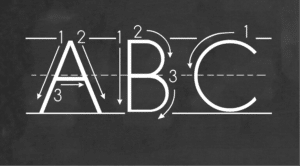
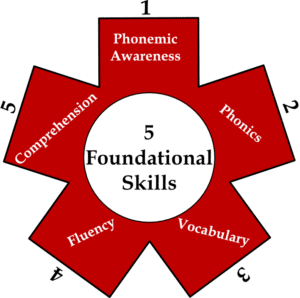
The program is structured and stepwise, aligning with the current science of reading five foundational skills. Most importantly, whatever your children’s ages, grade levels, or current reading skill, allow each of them to go at their own pace. Some will be faster and some slower. Speed is not the objective; learning is.
Teach Your Preschooler to Read–Step 1
With preschoolers, it’s best to start at the beginning. That’s Step 1–learning the symbols of the alphabet. Step 1 lays the groundwork for the first of the five fundamental skills, phonemic awareness. Even if your child knows the letters, start here and have them watch the Step 1 videos. They will then know about uppercase and lowercase. They’ll also understand basic information about vowels and consonants. Furthermore, you can get them tracing the letters while they say the letter name.
Begin tracing in the air using large motor movements. Keep the arm straight and control rotation from the shoulder. After that, you can move to tracing on paper. We’ve included the practice packet for Step 1 in the Special Summer Bundle. As you read aloud, show your preschooler various letters on any page to check what they’ve learned. You can check out our shop for phonetic and decodable readers that will help with this process.
Step 2 amplifies phonemic awareness with phonics, attaching a particular sound to each letter. If your preschooler works through just the first half of Step 2, you’ll be amazed at what they will be able to read on their own. The first six steps will haven taken them through the short vowels, all the consonants, consonant blends, and dozens of sight words.
Teach Your Elementary Schooler to Read–Steps 1 and 2
First, second, and third grade is where learning to read is supposed to happen. It’s often called “early elementary.” If your children are going into one of those grades, Steps 1 and 2 will benefit them greatly. Step 1 will reinforce the alphabet, which they should already know.
Step 2 is the heart of the reading instruction program. Use our free online videos to create a solid symbol/sound connection with your youngsters. Get the practice packet bundle for guided pencil to paper practice, tracing letters while saying sounds. The first half of Step 2 is easier because the sound sets are simpler. Short vowels and expressed consonants are distinct and uncomplicated in how they are produced. The second half of Step 2 introduces digraphs and long vowel sounds. These are followed by eight more vowel sounds. You can see the structure of the lessons here.
There are 13 weeks in June, July, and August. Happily, there are 13 separate sets of lessons in Steps 1 and 2. However, you should still let your students work at their own pace and go forward and back as often as they need. Plus, developing reading proficiency is a process that will build on itself. At the same time, by exposing young students to the symbols and sounds, you’ve put the foundation in place that supports the remaining required skills–vocabulary, fluency, and comprehension.
Teach Your Older Students to Read–Steps 1 and 2, Plus Step 3
What about students going into “late elementary” grades, fourth through eighth? It’s expected that they can already read without further instruction. Unfortunately, test results from the past three-plus decades don’t bear this out. It’s quite possible that one or more of your children may be among two-thirds of students who really need the help that’s found in a structured phonics program like ours.
Fourth grade is the breaking point for a lot of students. If they’ve been struggling “under the radar” of teachers and parents, fourth grade is when the struggle impact increases. The frustration that comes from falling behind usually transforms into behavior pattern. It can be as mild as lack of participation and interest to acting out. Students who are faltering know they are faltering. Also, it’s estimated that 15 to 20% of our students are affected by some degree of dyslexia. You can learn more about it here and here.
If You Have a Child with Special Needs
If you have a dyslexic student, he or she will benefit from going through Steps 1 and 2 thoroughly at his or her own pace. Using air writing when learning letters can really help. Tracing letters and words on paper while saying sounds is especially beneficial.
Do you have a high schooler who struggles with low grades? Do you hear complaints about hating to read or not wanting to go to school? Have you been contacted by a teacher about behavioral issues? These are signs of frustration. While the source could be any number of physical, psychological, or social factors, taking a look at the student’s reading ability is a great place to start. And since older students can be defensive about reworking what they think they already know, we have review lessons at the end of each step. The reviews contain all the important features in the lessons with somewhat less repetition.
Summer really is a great time to teach your child, your children, or even your neighborhood how to read. It’s easier than you think and profoundly beneficial. And here’s a kicker: you might even improve your own reading!